The Healthy Benefits of Skiing Later in Life
Scientific studies tout the benefits of skiing for your health, particularly for older adults.

– 3 min read
Scientific studies tout the benefits of skiing for your health, particularly for older adults.
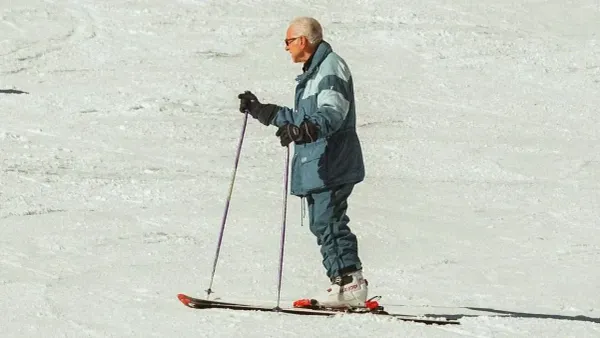
Have you ever heard a friend say, “I quit skiing, because I worry about negative affects on my health as I get older?” There’s research that says just the opposite; skiing may be good for healthy aging.
The insights below about the possible upside of skiing later in life are from three separate scientific studies.
The Salzburg Skiing in the Elderly Study (SASES) focused on skiers 60 or older. Skiers spent 2-3 days a week engaging in recreational skiing for a total of 12 weeks while other study participants did not ski at all.
Over the course of the study, researchers saw a positive impact on cardio-pulmonary fitness overall for the skiers. That's a measure of how heart, lungs and other tissues respond to exercise and deliver oxygen to your muscles during exercise. The skiers also showed improvement after skiing in measurements like pulse and oxygen consumption.
The study concluded that a ski season of roughly 2-3 days of skiing a week for 12 weeks has a positive impact on cardio-pulmonary fitness and can contribute to a heart-healthy lifestyle. The report cited downhill skiing as "a potent and attractive exercise modality to improve cardio-pulmonary fitness in the elderly in alpine regions." [1]
The same study also found the skiers involved showed increased leg strength and muscle power. [2]
So, we've got a heart-healthy practice that also builds stronger legs.
What else does science have to say about skiing? Another study shows it may help prevent falls.
Proprioception is your body’s ability to sense positioning and movement, which is important to your balance. Chronic ankle instability (CAI) may contribute to proprioception decline that can happen with aging.
A study published in Science Direct looked at the impact of regular activity in Snowsports on that decline and found some good news for skiers and snowboarders.
The project focused on skiers and snowboarders, partly because those are activities where individuals have to respond to variable snow surfaces and inclines and respond quickly. They surveyed skiers ages 12-70, but grouped participants into age groups to compare the statistics.
Here's some of what the researchers found about regular participation in snow sports in dynamic and changing environments:
1) It may protect you against age-related proprioception decline.
2) It may also provide a rehabilitative effect for CAI.
3) The study concluded, "snowsport participation may be beneficial for active healthy aging and fall prevention." [3]
In Spain, a study looked at a group of active adults over the age of 55 and compared skiers to non-skiers.
The group of skiers showed improved signs of health-related quality of life. They also showed better physical self-image compared to non-skiers.
The study went on to say that "compared to other types of sports commonly practiced by active adults over 55, alpine skiing is associated with higher levels of physical health" [1]
The next time a friend tells you they’re thinking of hanging up their skis to preserve their health, send them this post as some food for thought.
These reports suggest the opposite, that continuing to ski regularly as you get older can help with healthy aging. Of course, consult your healthcare professional for any decisions about your exercise*.
Want to keep up to date on more articles like this? You and your friend can subscribe to the Lift Line for emails from Golds Skis about future topics.
*Disclaimer: The above content is for informational and entertainment purposes only. Always consult a qualified healthcare provider before making changes to your diet, exercise, or wellness routine. Use of this information is at your own risk.
Sources:
[1] https://www.mdpi.com/1660-4601/18/21/11378
[2] https://onlinelibrary.wiley.com/doi/abs/10.1111/j.1600-0838.2011.01337.x
[3] https://www.sciencedirect.com/science/article/pii/S2772696722000102