Bluemont - An Abandoned Ski Area Revisited
Yorkshire, NY was once home to Bluemont Ski Area. The land is now Blue HIll State Forest. I went back to see what I could recognize from a ski area frozen in time.

– 9 min read
Yorkshire, NY was once home to Bluemont Ski Area. The land is now Blue HIll State Forest. I went back to see what I could recognize from a ski area frozen in time.
Part 3 in a Series: Discovering my Ski Roots
Driving down a vaguely familiar country road, I recognize a few turns and old barns. The road winds through corn fields and leads into the hills until I arrive at my destination. Before me towers an 800-foot hill, an old friend. A lift tower with a bullwheel stands on overgrown trails that descend to a shuttered and vandalized lodge and patrol hut.
My visit is to the ghost of a former ski resort known as Bluemont in Yorkshire, New York. It was once home to the bustling ski slopes where I first became hooked on skiing. In 1979, my parents made the investment to transition our family from skiing just a few times a year at a free county park, to having season passes at Bluemont. We skied there almost every weekend for three seasons, until the ski area went belly up in the spring of 1982.
I always wanted to return to this happy place from my childhood and see what I could recognize. Until now, I thought the land was privately owned and off limits to visitors.
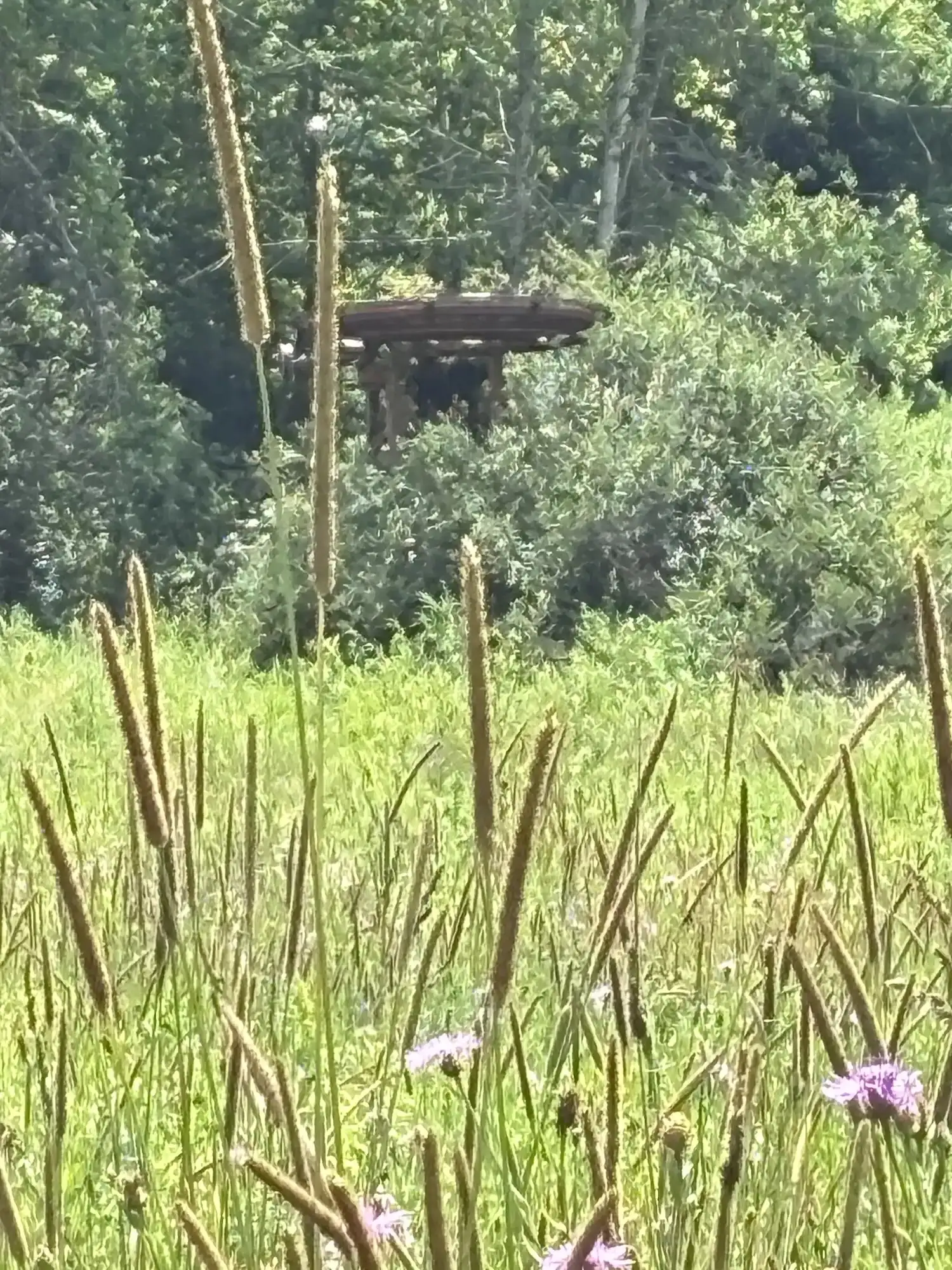
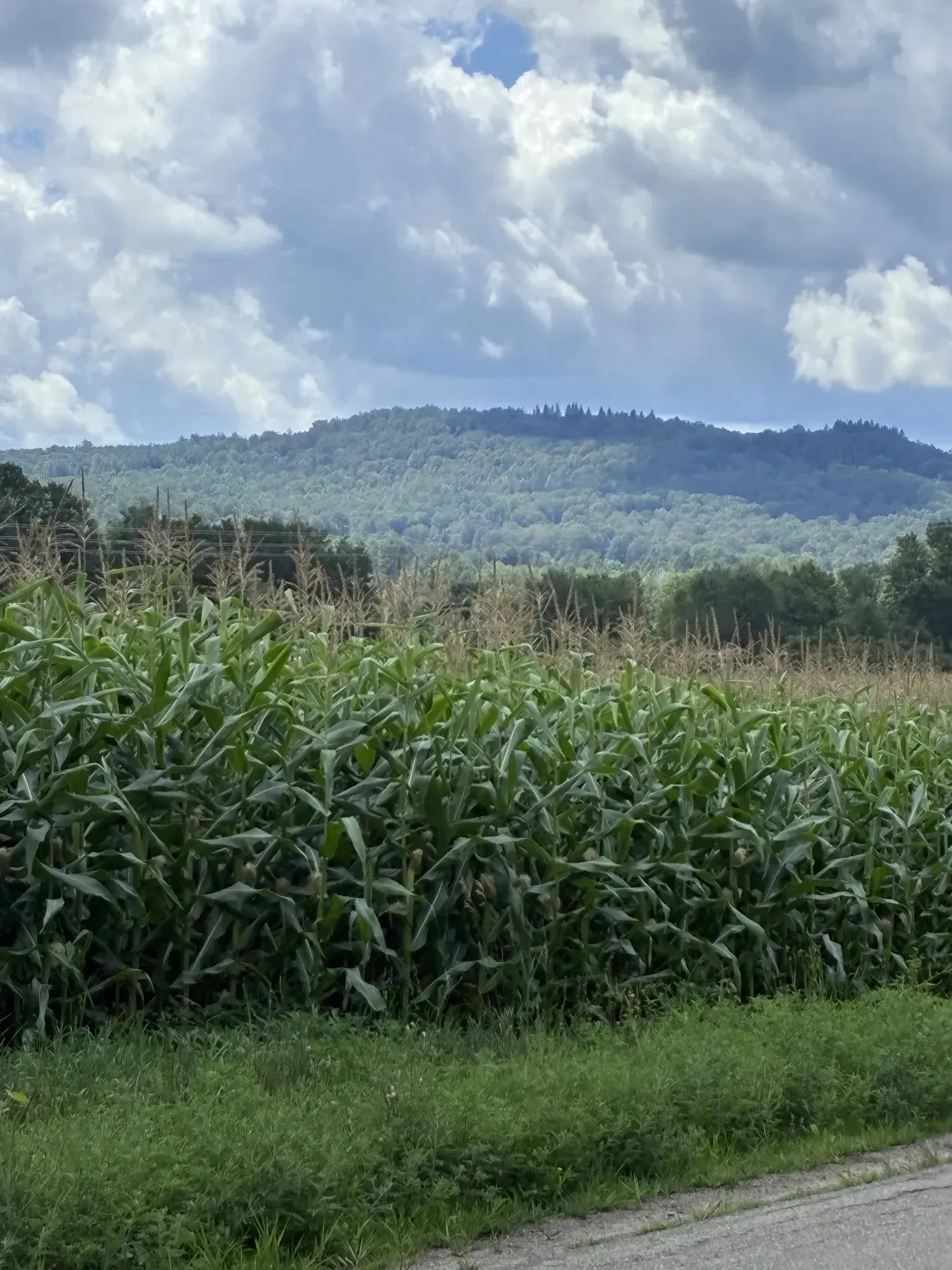
Old lift tower bullwheel. 800 foot-high Bluemont rises beyond the cornfields.
The old Bluemont is one of many hundreds of ski areas that have closed down in the Northeastern US and perhaps one of thousands worldwide. The New England Lost Ski Areas Project has documented over 600 lost ski areas in New York and New England. I read about Bluemont on their site and was happy to learn the DEC acquired the land in 2024. It is now open to the public year round.
Today this land is known as Blue Hill State Forrest, a 1,200-acre recreation area preserved by the New York State Department of Environmental Conservation. I hoped to hike the old trails, but found that was not the best idea for a visit in late summer. The ski runs are still visible and have not fully returned to forest more than forty years later. But they were overgrown and the grass on the trails was dense and up to my eyeballs. The place was reminiscent of a ghost town, but a ghost resort instead.
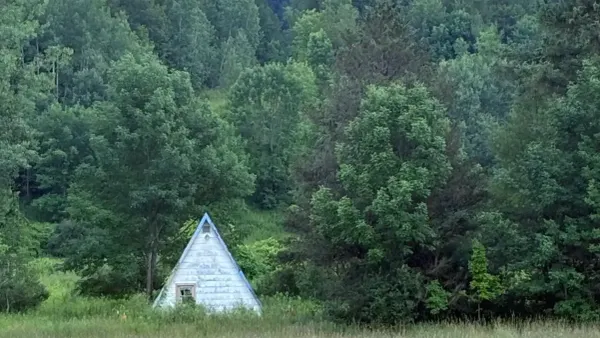
Memories of ski days here started coming back to me. I recognized the a-framed building where as young kid I was treated by a very kind ski-patrol team for an injury.
When I approached the old main lodge, my only welcomes were a faded rental shop sign and another that read, "enter here." But I couldn’t enter. The building was roped off. I walked around the abandoned building; some windows were shattered and parts of the interior grown thick with vines. From outside the barriers, I snapped a flash photo into the lodge, which was answered by a rustling inside the lodge. It’s probably a squirrel, or a chipmunk, I thought to myself. But what if it’s something like a bear that I’m disturbing and I’m out here alone? I decided not to venture much further on my own. I’ll return later with friends. Perhaps I’ll wait ‘til winter and visit for backcountry skiing or snowshoeing. At the very least, hiking in spring before the grass grows should prove a bit easier.
Later that day I asked a local about bears. “Yeah, there’s one I see on the property there every day. But it’s just a cub.” That made me feel I made the right choice to not go much further. Better not startle a cub. Mama bear is never far.
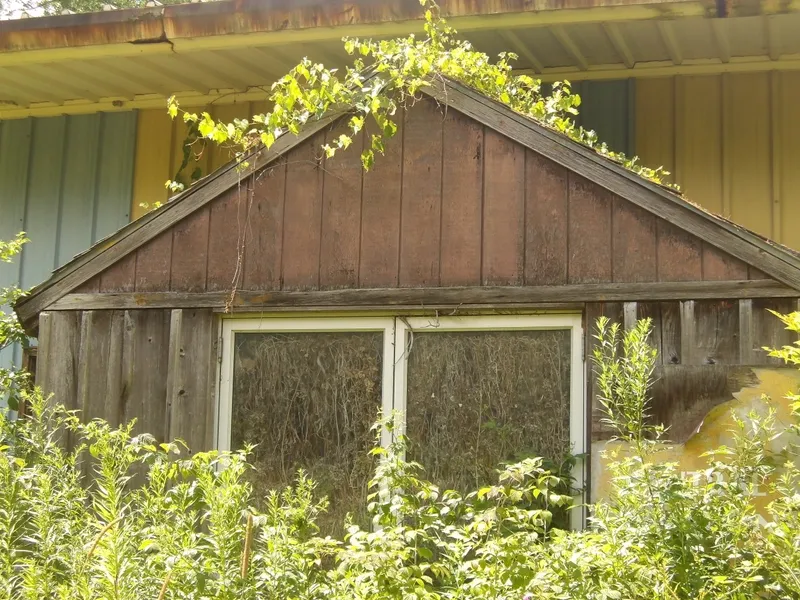
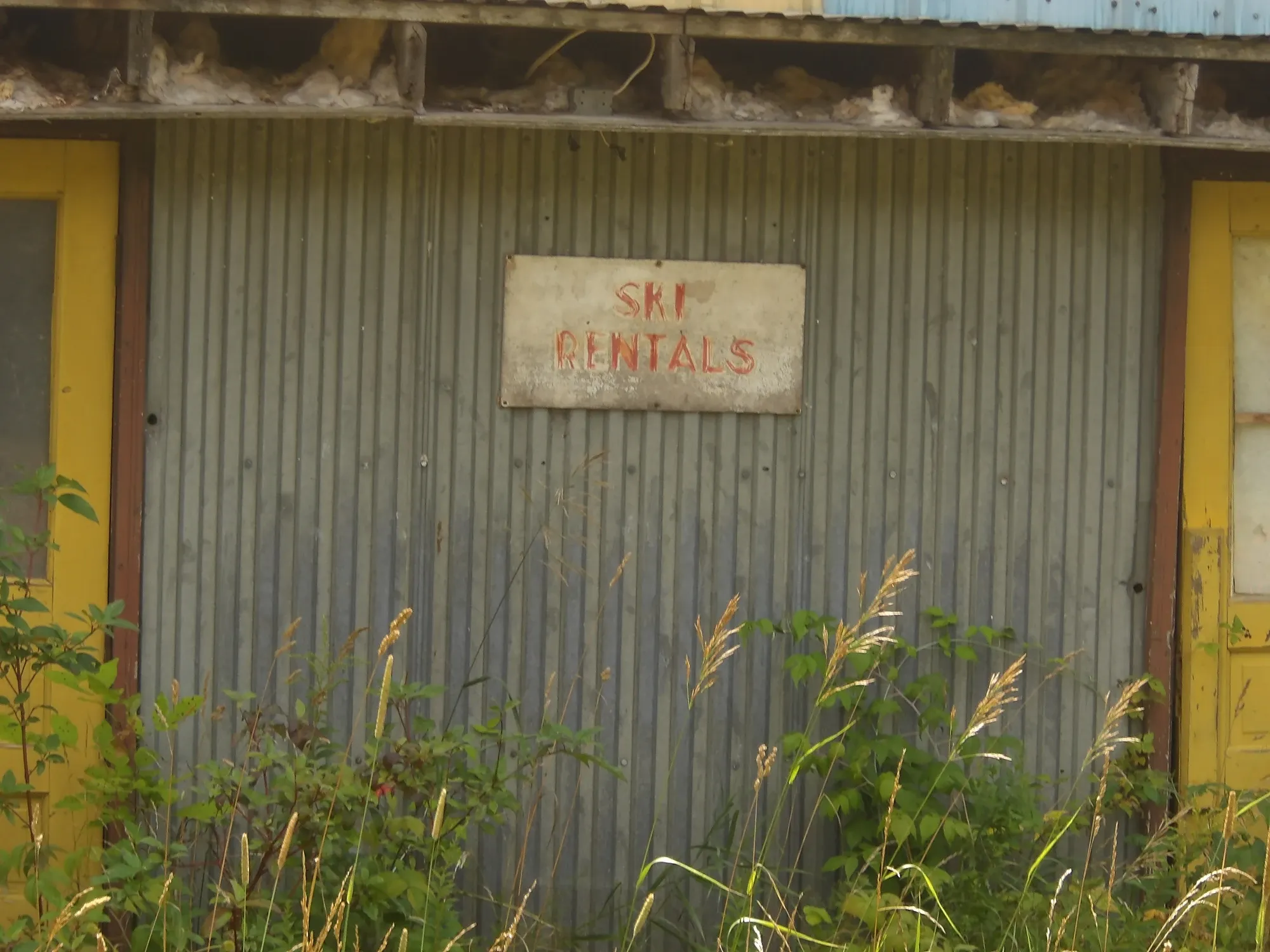
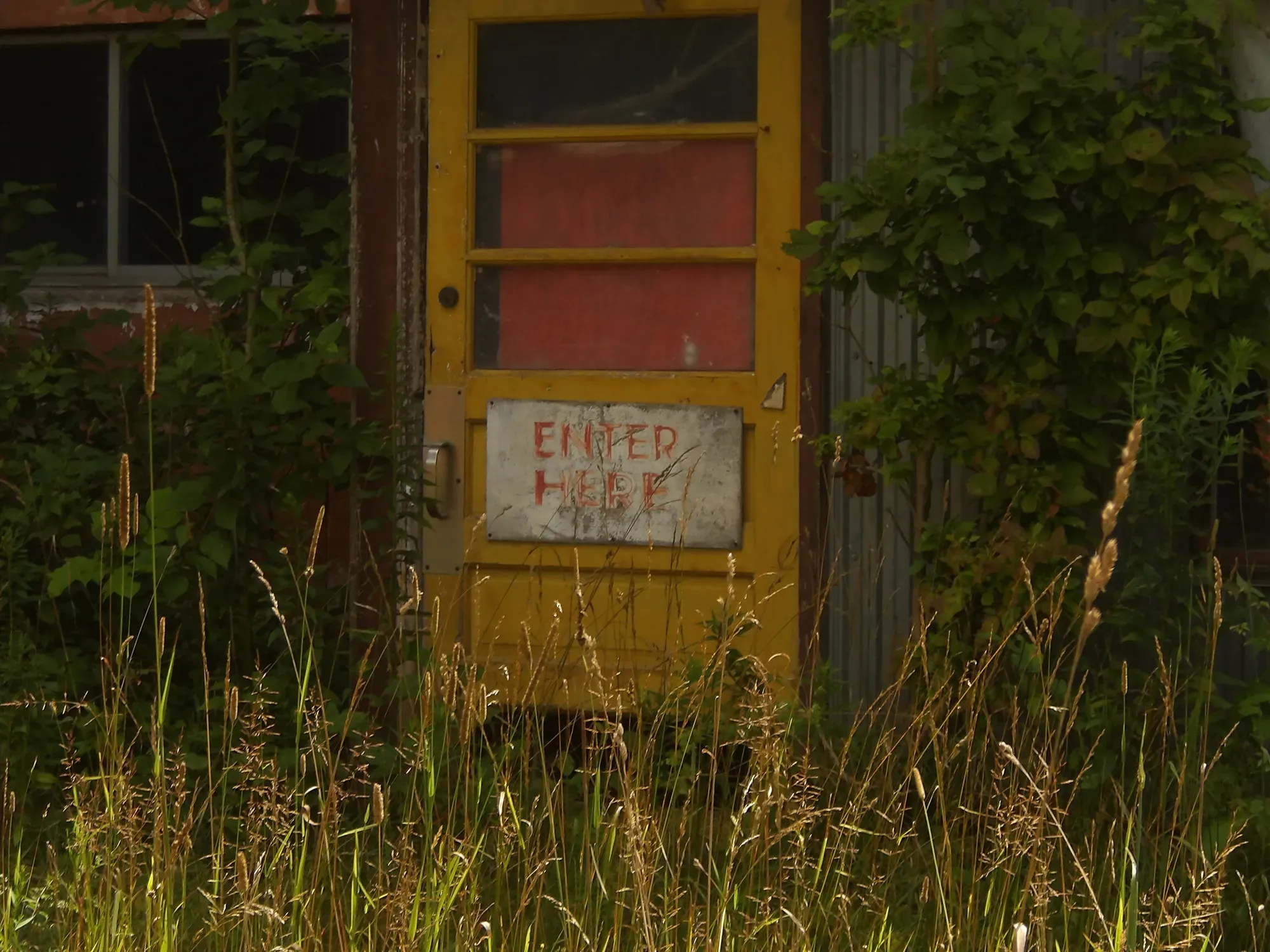
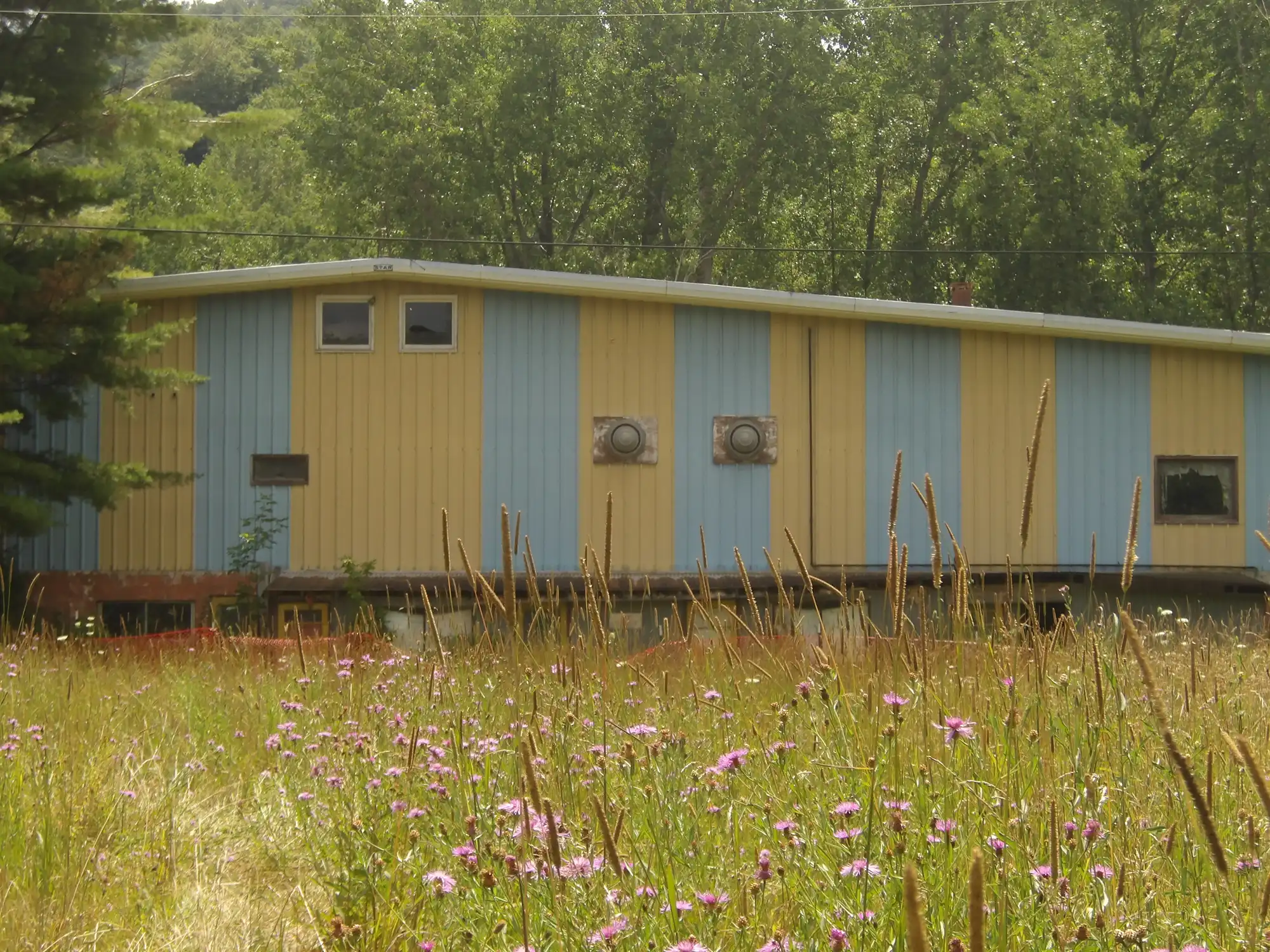
The ski lodge looks much the same from a distance. Close up it has become overgrown and signs have faded signs since closing in 1982
As I walked away, I looked back at the hill and the lone visible lift tower. Suddenly a sound came to memory. The sound I recalled was made by the T-Bar. Each bar had a hug spring that made a metallic sound as they bounced that I thought was straight out of the movie Star Wars. Funny how a place can bring back a sound I’ve not heard in so long.
There was also a chairlift; the first chairlift I ever rode. I loved looking around at the surrounding hills from the lift, but recall it wasn't the most reliable. When it broke down, they offered bus service from the lower parking area, to the top parking area. That was also fun as long as it was infrequent.
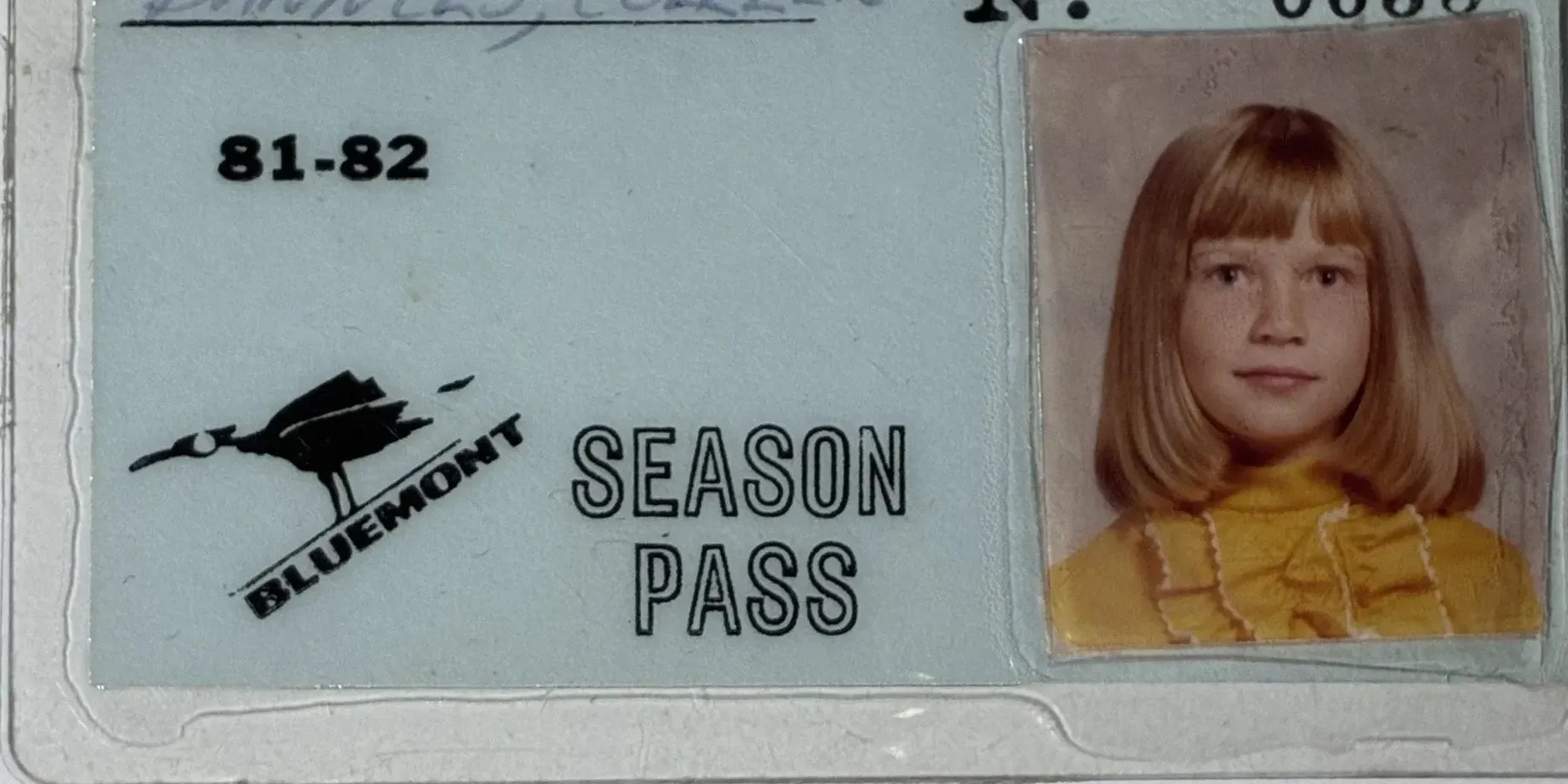
The now dilapidated base area was once quite busy. Just as you entered the lodge, there used to be a row of vending machines. My brother was an expert at finding lost quarters near the machine quarters someone left behind, so we could get a pack of gum. Hubba Bubba and Bubbalicious were our favorites in the 80's.
The family area was a modest lineup of picnic tables that backed up to a cafeteria counter. The far side of the lodge I could see as a kid but was not allowed to enter. It was the bar, and in the center of that lounge was a big round fireplace. The bar was always filled with loud, happy voices and smoke. In the early 80's people smoked at ski areas, including in the lodge. We’ve come a long way on making skiing healthier that way.
A modest number of runs here covered a wide variety of terrain. I wasn’t a great skier then. Penny Lane was my first run. This long green trail started out gradual on skier’s left with pine trees dotting the center. It wound down the outer edge of the area with varied turns and pitches until it reached the base. Wing is not on any old map I can find. It might have been added later than the maps I have. That trail looped off the top of skier’s right, circling out and back just enough to give fantastic views of the local farmland. Expressway was aptly named; it went under a bridge…while T-Bar riders glided over top. Just after the bridge a handful of trees were peppered across a wide run. Main Place was just like it sounds, the spot to be seen right off the chairlift and the center of the mountain. Bitter End was beyond my ability at the time. I liked to sit at the bottom of the run and watch skiers attempt it. Some successful, some not so much.
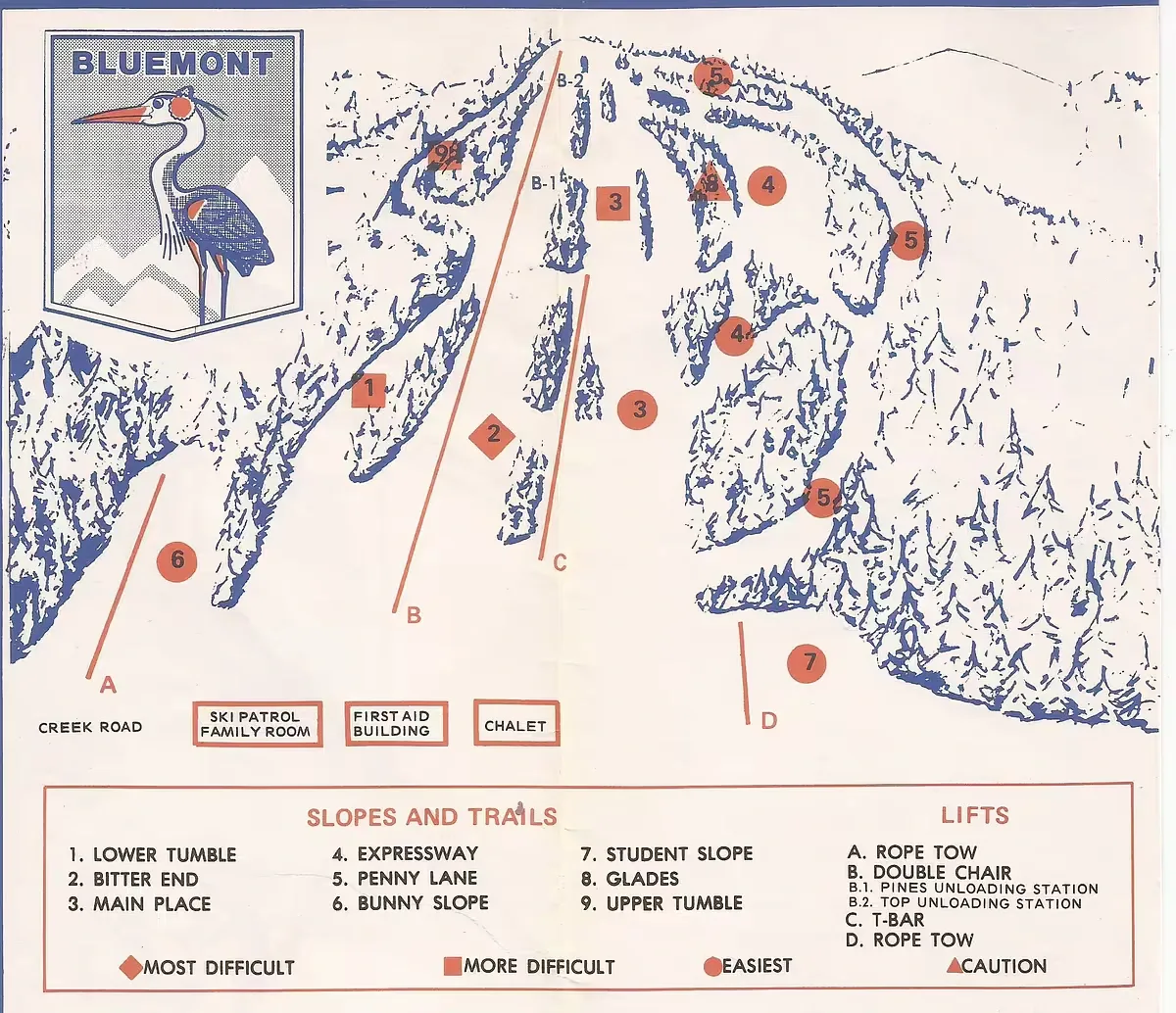
Perhaps they remind us of a simpler time. Nobody cared how long the lifts took, because we had never seen fast lifts. You went skiing with the warmest clothes you owned. We didn't have high-tech fabrics. A lot of conversation happened and friendships were forged during frequent lodge warm-up breaks and leisurely lift rides. Corduroy snow surfaces weren't a thing yet. The snow cats shared the hill during the day for some grooming. You learned to navigate whatever surface mother nature offered and made the best of it. Skiing was, as it is now, a great way to spend the day outdoors with others. Back then it was relatively affordable. You could bring friends along to try it for the first time. They could join in without investing in special clothes, protection, gear and hefty pass prices. We probably spent more on hot beverages back then.
Like many ski areas where the lifts have stopped turning, this mountain simply closed down. I don’t recall any calls for last runs or farewell parties. The season ended. They hoped to reopen. The numbers didn’t work.
Bluemont sat quiet for a number of years. By 1992 it had been purchased by Kingbrook, a group of investors from Toronto, Canada. As I recall, Kingbrook planned to create a more upscale, private resort with individuals investing in ownership. They set up an office in nearby Springville, New York with a single chair from the lift hanging out front. The location was strategically placed where skiers would pass by it on their way to nearby Holiday Valley or Holimont ski areas.
The finances never came together. By the looks of the property today, I suspect Kingbrook never invested a dime in the Yorkshire property. It sat empty with the chairs simply lying on the hill and the lodge shuttered. My short hike there showed an area stuck in time, but overgrown and slowly returning to nature.
In September of 2024, the New York State Department of Environmental Conservation purchased the land from Kingbrook Funding, LLC for $2.1 million. In its new life s Blue Hill State Forest, the hill is open to the public during the day year-round and is free to access. There are no open facilities, just the abandoned ski buildings which the state intends to eventually remove and two parking lots. Other hikers have complained of ticks on the land. So, I covered up, wore repellent and had no issues myself.
When snow falls, you can bring your skis to skin and backcountry at your own risk. But the slopes have not been maintained. It would be a rugged adventure. Perhaps I'll check it out in January on Snowshoes first.
Is there an old abandoned ski resort in your past? Are you holding on to memorabilia and photographs? Consider sharing that information with The New England Lost Ski Areas Project or a ski museum or local library.
Of course, share your memories in the comments below. You do have to create profile to comment. It helps us keep automated bots from filling the page with fake comments. But it only takes a moment to sign up. Plus, you'll receive our email newsletter, The Lift Line. I would love to hear memories of your favorite old spot.
Related Posts:
 Colleen Cardarella

This story is part of a series: Discovering my Ski Roots
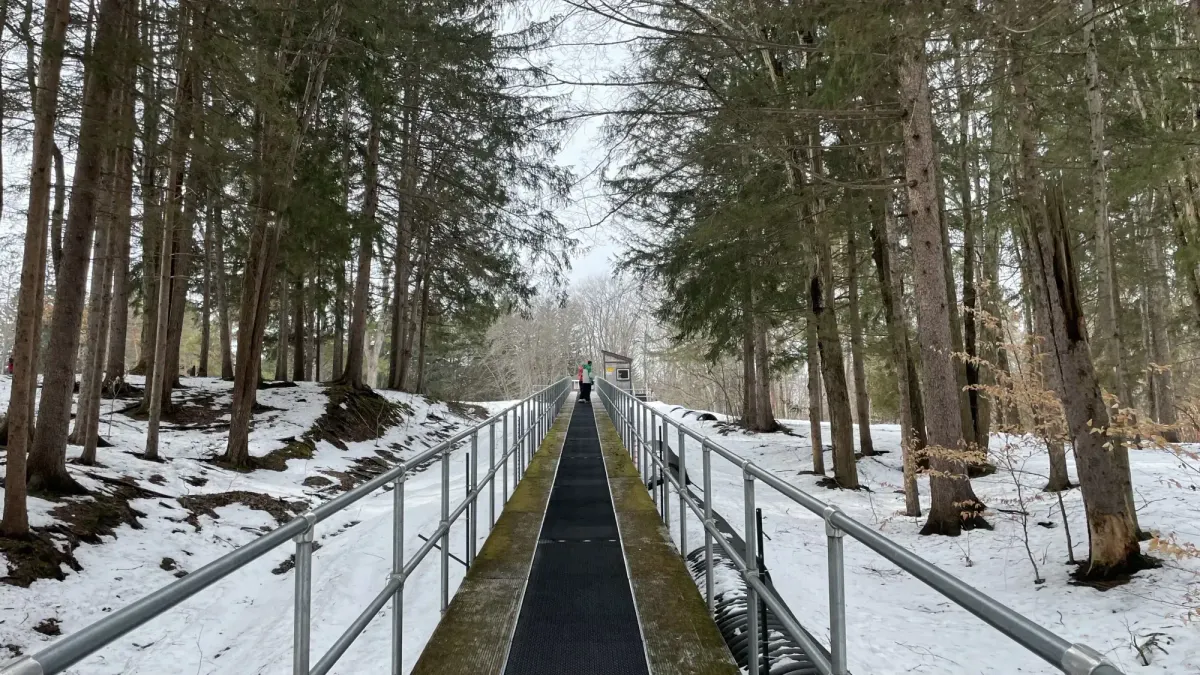
Ski Roots Part 1
 Colleen Cardarella
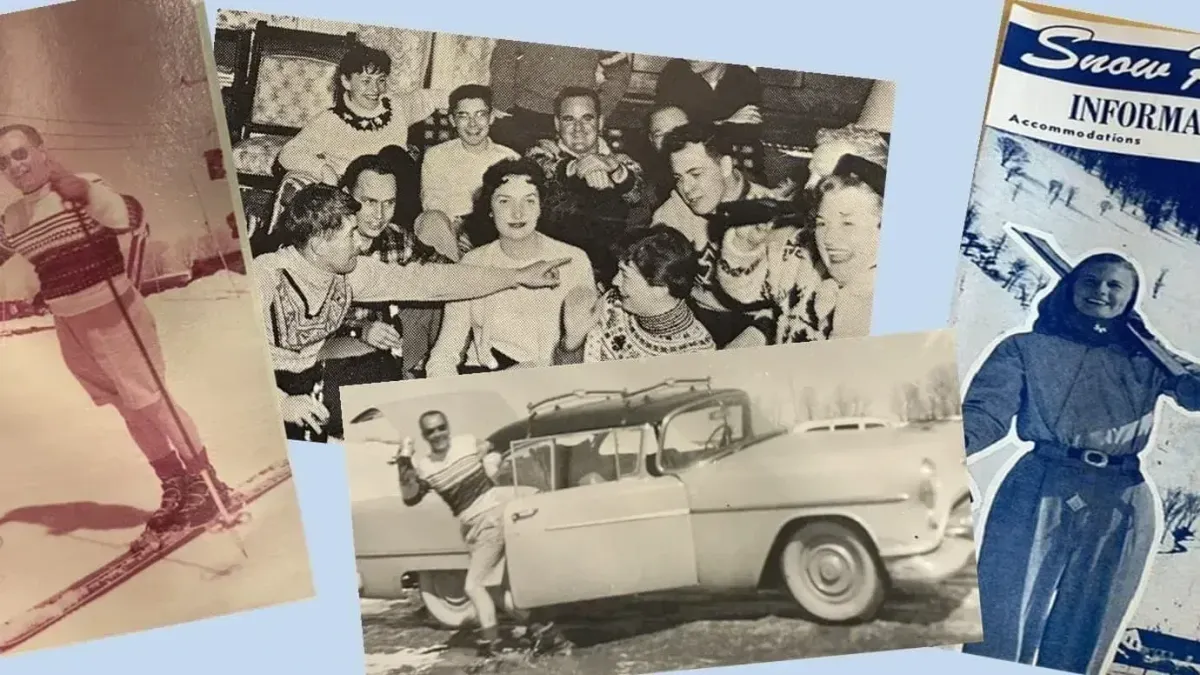
Ski Roots Part 2
 Colleen Cardarella
Additional References: https://dec.ny.gov/places/blue-hill-state-forest