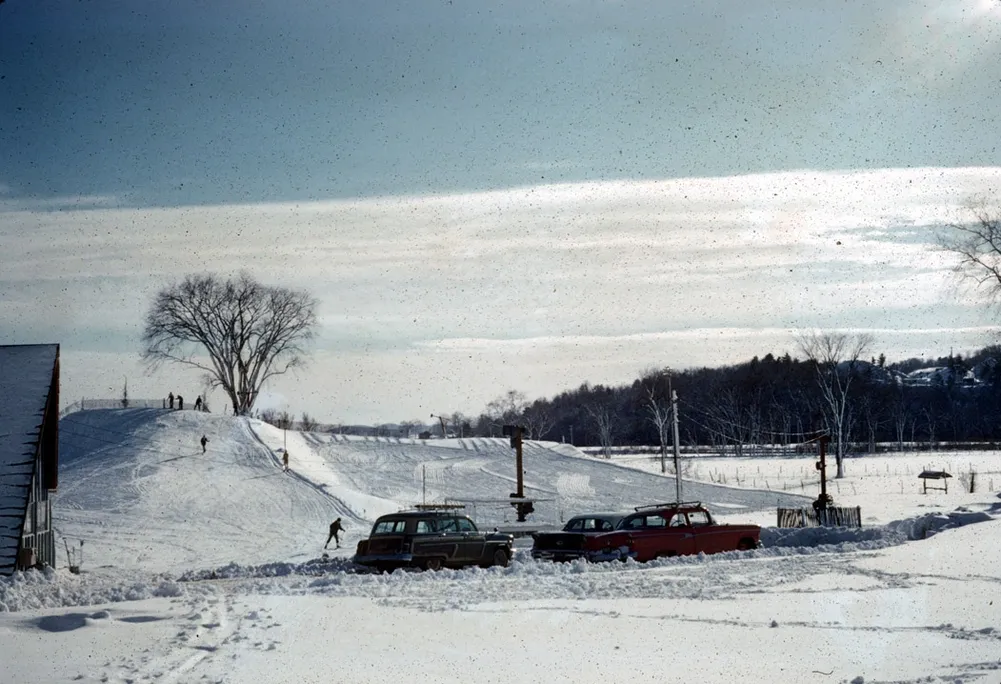
Alpine communities around the globe have lost many of their early ski slopes. New England alone has lost over 600 ski areas. Curious about the stories behind these places, or what happened to them after the lifts stopped turning? Drop into downhill history with our guest, Jeremy Davis.
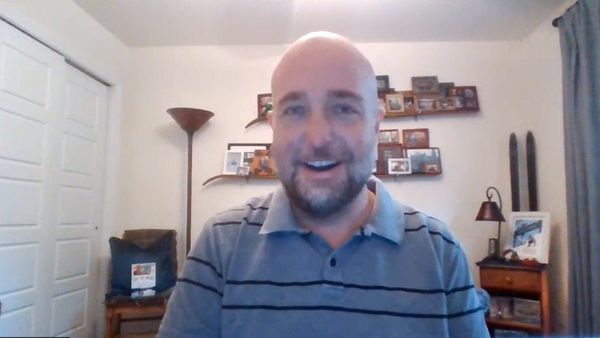
Jeremy Davis, Founder of the New England Lost Ski Areas Project
Today's podcast guest, ski historian Jeremy Davis, estimates there may be a couple thousand lost ski resorts worldwide. He has spent a lifetime researching, documenting and preserving the stories of the ski areas of our past. He's founder of the New England Lost Ski Areas Project, a published author, meteorologist and an emeritus board member of the New England Ski Museum.
Listen in as we talk bout the ghosts of old resorts, a bit about the weather, the future for small ski areas and the role you can play to help preserve skiing's history.
Full Podcast Transcript
Colleen Cardarella 0:01
Today's Guest
Welcome to the Gold Skis Podcast, where we talk about skiing, but tailored to the 50 plus audience. I'm your host, Colleen Cardarella. In this episode, we're going old school to take a look at skiing's past. Have you ever wondered about a place you used to ski that's no longer in operation? And what happened to it? Or maybe you were driving down the highway and saw what looked like some abandoned trails and wondered what the history was on that area. Or perhaps the place you ski now is struggling to hang on and you're curious what options might lie in its future. Well, if that's the case, then you're going to want to listen closely to today's episode, because our guest has spent much of his life understanding, documenting, and preserving the history of hundreds of ski areas, and he's got a lot of knowledge to share. So today, we are joined by Jeremy Davis, historian, author, meteorologist, and avid skier. He is founder of the New England Law Ski Areas Project, where he's preserving the history of New England ski areas that are no longer in operation. His website for this, NELSAP.org, that's n-e-l-s-a-p.org, is a go-to source of information about ski areas of the past. He's also published five books on the topic. Oh, and did I mention Jeremy's also an expert on the weather? He has a degree in meteorology and is a director of operations at Weather Routing, where they do the marine weather forecasts. So we're definitely going to chat a bit about the weather because everybody wants to know El Nina - La Nina - what is our forecast looking like for the ski season ahead? He extends his love of preserving skiing's history as well to leadership roles with some well-known organizations. At the New England Ski Museum, he's an Emeritus board member and previously served on the board of directors for two decades. He also served on the editorial review board for Skiing History magazine. Welcome to Gold Ski, Jeremy Davis.
Jeremy Davis 1:58
Thanks, Colleen. Glad to be here.
Colleen Cardarella 2:00
Well, we're glad to have you. I want to start right off talking about how you got started in this. Um, it's kind of an unusual thing, and you've developed a real niche for it. And it started really early on in life for you. So tell our listeners a bit about that.
Documenting and preserving the history of our Lost Ski Areas.
Jeremy Davis 2:15
Yeah, so I first learned to ski in 1989 and I had tried other team sports before that, back in elementary school, and none really stuck. So my parents decided, hey, let's try skiing. It's an individual sport, but it could be a family sport. Let's give it a try. So I learned to ski at Neshoba Valley outside of Boston, Massachusetts. It's still open and doing quite well. so I learned how to ski there, and then after you know a few years of learning to ski there, we started taking some family trips up north. And um, one of the places that we went to was up towards North Conway, New Hampshire. Um, and on the way up there, we passed a ski area that was closed called Mount Whittier. At that point, it'd been closed for about five or six years, and I knew nothing about ski history. I just learned the sport a couple years before that. I knew nothing about you know what the history of development was or about those lifts. I just know that I really enjoyed it. Like my brother and I were really picking it up. We really, it was a great sport. We both really took to it. Um, and uh, but you know, so I didn't know much about the history, but as we went by this lost area, Mount Whittier was still pretty recognizable at that point. Um, the trails were just becoming overgrown. Um, it had a gondola lift that went over Route 16 there, and the towers were still standing then and actually still are today. Um, there were some old gondola cars out in front of a gift shop that were there. Um, the base lodge was all boarded up and abandoned. Um, and it just really caught my interest because you know, when you're in your early teens and you're a kid and you see some abandoned things on a mountain, it's kind of cool that you want to go and explore it. That mountain, unfortunately, you really couldn't because it was all boarded up and barbed wire and no trespassing signs. So we couldn't get in there, but we could get pretty close, we could drive up to it, and it just really caught my attention. I was like, what happened? I spoke my parents, and you know, they didn't know, um, they hadn't didn't have a skiing background. Um, but um, and then on the same trip, we went to Black Mountain in New Hampshire, and we noticed some things was one of the first larger mountains I ever went to, and then we noticed across the valley that there was an old ski area there called Tyrol, um, which was also had been abandoned at that point for about 10 years, but it was still pretty recognizable from a distance, and you could see the trails growing in. So that just got things going in my brain, and I'm like, wow, there's more of these other mountains out there that are like you know gone. And what's the history behind them? And you know, and this is in the early 90s, it's pre-internet. Um, I can't drive yet. Um, you can't Google anything. You you know, it's it's hard to get that information at that point if you're a kid. And I would, you know, like, how do you find that stuff out? So what you could ask random people on chairlifts are riding up with, and once in a while, they would know. Um, but the one of the ways we first started was we look at antique shops. We'd go in antique shops and maybe find some old postcards and maps. And then I would, when we were planning out our family trips for different ski areas across the Northeast, um, I'd look at these maps and say, Yeah, maybe there's one of these places we can check out on the way or the way back. And my parents were always very supportive of that, Ken and Linda Davis. They were very supportive to these places and they kind of get a kick out of it because we do all this navigating on back roads and try to find these places. And sure enough, you'd come to a turn around a corner and there would be this abandoned ski area. And in the early 90s to mid-90s, so many of these places were much more visible than they are today, um, because they had been only abandoned for 10, 20, 25 years, which is still a long time, but they hadn't become completely reforested like so many have now. So you could find them a little bit easier. And we would go and explore them. Parents would park the car and they they say have fun and we go off and go hike them. Um, there was another one, Mount Agamenticus in York, Maine. Um, that we when we took family trips to the beach there, for we would go up to Mount Agamenticus and all the lifts were well, the T-bar lift was still standing then, and the trails were overgrown. That was really fun to explore. People could still do that today, that there's still a lot of remnants there. So it just kind of caught my interest, and we've gradually started to find bits and pieces of information and old postcards and maps from shops and antique stores. And I'd go visit the we stopped by the New England Ski Museum for the first time back there in the 90s, and I would check that out, and they had a lot of great exhibits. So it just really created just kind of fell into my lap, so to speak, as an ad as an interest that I didn't pursue. But then once I discovered it, it was something I really got very interested into this topic, and it just took off from there when I went to college at Lyndon State in Vermont. Um, I decided that I'd start a basic website in 1998 called the New England Law Ski Arias Project. Um, at that point, there was the development of some free website creation tools online, um, like GeoCities, where you could put together a basic website. So I thought I don't want to share a little bit what I know with the hope that others would share what they knew. Um, and sure enough, that's exactly what happened. It started to crowdsource the information. Um, people found out about the site, they sent me some information. Um, I would on the site, it kept growing, I kept finding places. Um, I would use the school scanner that took 20 minutes to scan one postcard back in the day to do it. Um, and then as technology gradually got better in a few years, I got a first digital camera as a gift from my parents and just be able to take digital photos was amazing. All the stuff now that we take for granted that was all you know not as common back then. And the site just really took off. It I was adding places all the time when I moved here to upstate New York. I worked on the the website before and after work. I made lots of connections and buy stuff on eBay, all kinds of memorabilia on there, because then you could do searches and find what you were looking for on there. Again, all these postcards and brochures, and and it just really took off. And it it's it's been quite an adventure seeing the site develop and what it has led to.
Colleen Cardarella 8:24
So you start this as a kid and you just start collecting and collecting, and it evolves into a website, which which is awesome. And you know, nowadays everybody's talking AI, and oh, I'll just ask AI. But you know, I went and asked AI about a couple of places from the past, and it references you, like your site - it's becoming the source or the go-to to check the information because all of this information comes from somewhere, so you've amassed all these pieces of information that you're you're putting together. And how many ski areas have you recorded the history of?
Jeremy Davis 9:03
Yeah, so on my site I have over six hundred, yeah, about six hundred and twenty-five ski areas on NELSAP in across the north and across New England. There's more than I have in a few of the other states on there as well, and then there's more that I have in the books too. So um, you know, up for New England, I'm not gonna find too many more areas. There'll be some that will continue to pop up because even when you think you've found every single one of them, some obscure rope tow that never got mentioned anywhere. Um, somebody finds evidence of it, or it was a private rope tow behind someone's house, which we do count because as long as it had a lift of some kind that was uh, you know, some kind of mechanical contraption to take people up the mountain. So, yeah, I think the final total will be about like 650 for New England. New York State, um, that's a hotbed of lost areas. There's probably about 300, if not perhaps more, in New York State. New York State being just such a large state geographically, and you know, um, and so many different different regions of the state has an awful lot. So there could be as many as 2,000 across the country, too. It's amazing. So there's plenty more to be discovered. But um, and then once in a while we have to take one off the list because it reopens too.
Colleen Cardarella 10:15
Which is that that's great. It doesn't happen too often, but that would be great. So I want to talk about one in particular.
Bluemont, NY. An example of how we can still add to the history.
Colleen Cardarella 10:21
Um, this is sort of my experience. So this is an memorabilia from where I skied as a kid. It's called Blue mont. It's one of those many places in New York State. And I always wanted to go back there. You know, I skied there the last year it was open, the last few years it was open, but I knew it had been bought by a development company. And I was just like, oh, you know, I don't know, I'd be trespassing or whatever. So I started reading about it on your site and saw that actually what I didn't know it was recently bought by the state and is you know forest land and it's open to the public. So I was so excited to read about it and find out what had happened to it. And I went hiking there a few weeks ago and little little rough hiking, the grass was about up to my eyes, but you can still see the trails. It was really interesting, and I could talk to the locals. and I have a piece of information for you because you gather all these bits of information. So I have my little season pass here, my last one from 1982. So I can add that it actually closed a couple years later than we were thinking. So you know, we have all these readers and listeners who are, you know, they're the people who ski these resorts, and they may have little bits of information, whether that one in New York that you haven't you haven't done yet, or or a small piece like this. Do you want to can, you know, what do you want to do with that information? Because you've already published so much. Do you want people to be continuing to add to the puzzle?
Continue to add to the stories of lost resorts.
Jeremy Davis 11:57
Yeah, absolutely. I always encourage people to send along their information as well, because what we can do is it's even if it doesn't necessarily make it to the website in a timely way, we can share it on social media very easily and then get to people to comment them on. Um, so we you know, we always encourage people to do that. They can just go to nelsap.org, check it out, and just send me an email on there. It's nelsap (at) yahoo.com, nice and easy to remember, or send me a message on our facebook.com/lostskiareas page. Again, very easy to find that too on on Facebook, which we do most of the posting on there. Um, but yeah, we're always looking for more information because this is a subject that can never truly be finished. Like you said, you found you made a correction, which is great to have, you know, to know a little bit better about when the last years of operation are. Because it's funny with ski areas, a lot of times that are that that become lost is that the beginnings are so well documented. There's lots of newspaper articles, there's a lot of coverage, but they tend to fade out at towards the end. And they weren't spending as much on advertising, the story stopped being done on them. So sometimes it's gonna be really hard to find the exact last day, sometimes because you know they don't know when the last day was gonna be, and they just close and that was it, you know, and there wasn't any follow-ups there. Um, so that's why, you know, when we hear some some facts and new details, we can make corrections and edits and and and all of that. So yeah, the stories will always be appreciated. Um, and it's it's it's great to know when people have stuff. And you know, when people have things like pictures like your season pass or the pictures of the of the mountain when it was in operation, you know, you never know because a lot of people have this stuff in their attics or their their parents' attics and basements, and they're like, Oh, nobody wants these old brochures or maps, but yeah, we'd love to see them or pictures and share them. Um, because some mountains we don't even have, you know, we don't have photos of them at all when they were in operation. Go from that, and then someone, as it turns out, they may have dozens of pictures of it in operation. And that's and how else would you find that, right? You'd be very hard to find a specific person that had a specific area unless you kind of cast a wide net.
Colleen Cardarella 14:01
Okay. So so they can get in touch with you, and that information is in the transcript below, and people can also comment below, and we'll make sure the information gets to you. So you've talked about your books. I've got one here and it's really nice. You've done some of the some of the areas in the northeast, and just to kind of show people through here, I mean you collected maps and information, uh, and we'll get a close-up on the camera after, but you know, photographs of the areas with some of the history. So it's really fun to take the different areas, you know, if it's your local area or an area you ski or visit, you know, this one is southern Vermont, and I lived in Vermont for a while as well. So I'm just really enjoying, you know, reading about the towns and reading about the ski areas that used to be there, so that the next time I drive up, I'm I'm gonna go looking for these
When a ski area closes, a few things can happen to it.
Colleen Cardarella 14:59
spots. So when an area does close down, what - what happens? Is there is there sort of a standard route they follow? What are what are the types of things that might happen after it's after it's defunct?
Jeremy Davis 15:13
Yeah, it's really interesting because there's there's definitely several paths that are taken when an area closes. sometimes they're closed and they're abandoned, and there's little else that's done, so everything's left in place or mostly in place. sometimes the lifts, the the carriers, the chairs or or the T-bars will be actually be taken off the lifts so they're not hanging on the cable. But there's a lot of places that you know they were hoping to reopen someday, so they didn't totally strip it of anything of value. Um, and then they didn't reopen, and then everything just kind of you know gradually decays in place. And so you can have a case where you know, decades later you have a full T-bar lift in the middle of the woods, and it's it's a really fascinating thing to explore. So you can have that. You can have other ones that were sold and they were sold for parts, and some another mountain comes in and buys the snowmaking equipment and buys the groomers and buys a lift and moves the lift. There's lots of lots of cases of lifts being moved around multiple times in some cases. There's been some lifts in New England that have gone to three or four different places, they just keep moving around. Um, and then eventually the area you know it returns to nature in that case. Um, you can have mountains that are turned into housing developments. That's that's happened, like Pheasant, yeah, Pheasant Run in Massachusetts, not too far from Fitchburg, that one. Um, it's now all houses. And in the back of the people's houses, there's little pieces of the trails left that are 20 feet long between the and their backyards because they were built on a terrace kind of going um, you know, or their switchback road going up to the top of the hill. Um, so that can happen. And if you didn't know that, you would never you would never notice that if you were there. Um, sometimes interstate highways were built to the center of areas. That happened in several of them when they're building new ones and they were to the these hills, and and because some a lot of these mountains were not ski areas, they're not huge, they were small, you know, hundred-foot, two hundred foot vertical places, and so yeah, you could build a road right through it . That's something that can certainly happen. Um, and then what can be sometimes the best thing that can happen is that essentially we're public land of some of some of some case. It could go to a town land, state land, you could go to a um, you know, the nature conservancy or some other you know conservation group that might purchase the land and then to reopen it for outdoor recreation for people to enjoy. So um, like hogback in Vermont is a classic case of that, where the area had been abandoned, a lot of the equipment had been left there, um, went through different ownerships and other groups trying to, you know, trying to figure out what to do with the land, and now it's it's it's a publicly accessible land, but the lifts are still standing, so it makes for a fascinating hike up there. People can hike and and bird watch and explore the trail, snowshoe in the winter. They could backcountry ski in the winter too, and a couple of the trails that are kept relatively open. Um, so that's kind of the best scenario is when it becomes a publicly accessible place again for people to enjoy on a different level than skiing. Of course, having it totally reopen as a downhill area is always nice too. And that does happen. You know, you can have some areas that were closed for decades. Mount Eustace in Littleton, New Hampshire was closed for quite a few decades, like three decades. And volunteers there were able to reopen it and reactivate it after being closed for a very long time. So that can happen too. So every case is is unique. Um, it also depends on the size of the mountain, where it's located, what's the value of the land. Um, but they can take some different paths, but then sometimes they'll kind of come back and you know, they'll cross and the path, the what happens to the land will change and come back, and it's it's really interesting what happens.
The many reason ski areas fail. From weather to investments, and even Disney.
Colleen Cardarella 18:58
So when an area shuts down, I I think weather is usually the first thing to get the blame. If people are like, oh, it was a bad year. Is weather really enough to to be the end for a ski area? Are there other things involved? What do you , or what have you learned from what you've read about these places?
Jeremy Davis 19:21
Yeah, certainly, you know, if you're especially if you're focusing on New England and the Northeast, the changing climate and change in every season, you know, sometimes these back-to-back years can be so different. Um, and how they you can have a really snowy year followed by a snow drought, kind of this back and forth and really changeable conditions. And there can be several years in a row where the weather was just terrible. Um, sometimes it is just one bad season if an area was hardly able to open, can can can knock it out of contention. Sometimes it's a few years in a row. I know one example that would be like Chickley Alp in western Massachusetts. That was a great family ski area, you know, wonderful place, you know, it's all locals mostly skiing there. Um, you know, a real classic area that was that had survived from the snow trains all the way up to the late 70s. And they had two back-to-back years in the late 70s to 1980, where there was just terribly low amounts of snow or almost no snow for much of the season, and they didn't have snow making capabilities. Um, and that's just crushed them. They were, they had still had to pay for their insurance, um, they still had to pay for all the maintenance and staffing, and then you know, we're not able to open it all, and it just they can't run them at a loss year after year after year. So that can certainly be the weather can certainly be a problem with that. Um, you know, and and a lot of these areas, we still think we think we all have in our minds like what you know, what a more modern ski resort looks like for snow and snow making. And the net the natural snow is like a bonus nowadays, but not necessarily a necessity. It's nice to have, but so many mountains across the northeast, middle states can can just make all the snow they need. But these smaller places, you know, affording a snow making system, you know, if you're a 300-foot vertical hill with five trails, it's very prohibitively expensive. So, you know, if you have it, it's great, but it's very expensive because typically couldn't afford it. or if you have a lot of bad weekends too, like you could still have an okay snow year, but if you get knocked out at the holiday weeks, you know, and it's great the other times, that can also just crush the mountain. So, you know, weather is certainly a big role in what's what closes these mountains. Again, high insurance rates can do it. Um, you know, the inability to invest in capital improvements because things are just so expensive. Um, you could even look at like vacation changes as the baby boomer kids got older. Um, there was less kids behind them in the next generation. Um, so you had this big burst of areas opening up in the late 50s and 60s, and then it kind of peaked around 1970 and then pulled back ever since then, um, or even just other places people can vacation. Because, you know, in the 1950s and 60s, it wasn't really jump on a plane to Disney World because it didn't exist yet, you know, um, at that point. Once you had all these other places that people could go to in the wintertime, some people want to go to someplace warmer. Um, yeah, between other recreation, other places, go to the beach, go on cruises. Um, that affected and kind of diluted the the need to stay local and ski during the winter time if you were in the northeast. So there's there's all kinds of reasons. Gas crisis, you know, the 70s, the gas shocks, didn't have enough gasoline to travel terribly far, inflation, you know, all these things can definitely kick in to affect these areas and close.
Colleen Cardarella 22:40
So, I've gotta ask
Weather predictions for the upcoming ski season
Colleen Cardarella 22:42
because we're coming off of a 25-26 season, which you know, for New England was great. I mean, I had some great skiing up there and in New York, but places out west just got crushed by by bad weather. Um, can we really tell like what what's the outlook for the year ahead for 26-27? Because I know everybody wants to know.
Jeremy Davis 23:04
Yeah, yeah, because it's gonna be a very interesting season to watch. We're gonna be having a likely historically strong El Niño this year. Um, all the signals are are are going towards that. Um, what that typically would mean, the thing is with this El Niño, it's gonna be so off the charts that there could be unexpected results with it. So I'll definitely caveat that. But typically during strong El Niño, there's a stronger subtropical jet stream, which brings all the storms into like Southern California and into the Pacific into the southwestern U.S. So those areas, Southern California, Southern Nevada, uh, Arizona, New Mexico, we get a lot of storms in southern Colorado, Utah. Um, and then into the south gets a lot of rain and some snow in the higher elevations. The Northeast typically tends to be, especially when it's a really strong El Niño, um, it tends to typically can be more drier and a little bit more mild, which is not what we'd want to see. But if the jet stream buckles and you get a storm coming up, you get some mixtures as well. It's typically drier, warmer across the Midwest and the Pacific Northwest, too. Um, so we'll see how it all goes. The thing is about a season is you have so many days in there, you know, where things can change back and forth To to summarize a whole season, you know, you can you can have areas that are open from November to to May, things can be - there can be a lot of variability within that. So even if the pattern isn't super favorable, there still can be some good, you know, times within that period. We've had a few good years here in the in the northeast, and at least for some mountains, we'll see if that can continue this year. Um, but it it's yeah, it's not looking the greatest right now just because of the intensity of the El Niño.
Colleen Cardarella 24:46
Okay. Well, no, hopefully hopefully it'll be
Early ski entrepreneurs were very creative. Crazy examples of lost resorts.
Colleen Cardarella 24:49
good. so you've documented so many places. Is there is there one place that you just would love to tell the story about one place that kind of I'm sure there's a a lot, but a particular place you want to story of what happened there?
Jeremy Davis 25:05
Sure, yeah. I think I think some of the things that are really interesting too is when you look back at like what some of the ski area owners and operators tried to do to kind of compete and be different out there or to come up with a different product or really think outside the box. So, like one example would be Green Mountain College in Pultney, Vermont. The college is actually now no longer a college, too. So the college has become lost. the buildings are being reused for another purpose now. But Bill Jenkins, um, he was like the athletic director there and the ski instructor. And a lot of some of the Vermont colleges then had a skiing program of like learning to ski, not necessarily racing, but learn to ski. and he had he had invented a ski lift before called the stable disc lift, which was really interesting. He put in Birdseye Mountain. It was like a Poma lift with a very flexible kind of a hose, like a rubber hose that to ride on instead of a stiff metal bar. So it was easier to ride up a little bit more comfortable. So he was an inventor, a tinkerer, and and he helped to invent a few of these unique lifts. and he wanted to bring a ski program to Green Mountain College. And the thing about that - and bring it to campus, um, but there wasn't really much of a hill there. So what he did is he got Phil from a nearby highway project to be continually dumped onto the campus to actually build up a mound where he could actually build his own ski area. And he did, he built it so that it would have three different sides to it. There'd be a beginner section, an intermediate pitch, and an expert pitch. Um, and he actually put four lifts on this little bump, you know, that was you know no more than 150 feet wide, so to speak. And he figured out what the vertical drop was, and it was the first time I ever had seen this, and the only time I've ever seen this, that it was 31 feet, seven and three-quarters inches. So when you you know when you have a vertical drop down to the quarter inch, that you could tell that that was really a unique situation. and it's great. It's and I got lots of pictures on my site about it. So that's like an area that was like literally created out of nothing, and it just shows to some of the the level of inventiveness that these these early pioneers would have.
Green Mountain College's 31 foot, 7-3/4 inch drop
So that's just that's just one example. There's there's plenty more out there as well where ski areas would try to have certain themes, like King Ridge in New Hampshire would have an Alice in Wonderland theme, and they were upside down. So they had a couple lifts at top and ski to the bottom, you know. So there was one like that. There was Sonnenberg in Vermont that decided in the 1980s to have the most expensive lift ticket in the country to advertise that to try to see if people can come. And it would include a gourmet lunch and a bottle of wine and things like that. Um, so yeah, there's tons of stories had a had an interesting story. They were almost all quirky places, and they're all places that people that skied them will remember them. And I think a lot of skiers over 50 and just skiers in general probably have skied a lost ski area, and they're gonna have fond memories of that. Really things that happened back in the past that nowadays we may not be um, you know, that there'd be regulations to prevent happening on the mountains and some of the things that they got away with, or you know, things that might be a little dangerous nowadays. But these these areas a lot of times they they tried to be unique and they had a period of time where they really were.
Colleen Cardarella 28:29
Yeah, yeah, that's true. I think we've all we've all got a few stories of the old places and some of the things that we did there. Maybe that that could be another episode
How To Support Small Ski Hills
Colleen Cardarella 28:38
someday. So you know, there are still a lot of smaller ski area out there, but obviously there's there's the large resorts that are part of the the larger groups, and then there's these small independent areas. And you know, I ski a lot of them. I ski both. I ski all ends of the spectrum. Um, but it's it's nice to visit some of these smaller places. And you know, sometimes I'll go there with a friend and they'll be like, oh, I wonder how they how they keep going. Um, you know, I know the Indy Pass, they're always talking about keeping these these ski areas alive. Is there anything that you know people as skiers can can be doing so that they can help support their local resort or or help keep these places alive?
Jeremy Davis 29:23
Yeah, absolutely. I mean, the thing is is that by going to a smaller or independent mountain, um, you're probably helping a local business. Um, and you're gonna have a great time at these places. You know, if you if you as long as you don't think you're gonna be able to, you know, crank out 50,000 vertical feet in six hours or something like that, you're gonna have a blast and you're gonna find a lot of character at these mountains. Um, some of these mountains have quirky old lifts, but they they're they're cool and classic, you know, when they they take you up the mountain. they may have, you know, like if you want to go to their restaurant and their in snack bar at their base lodge, it's gonna look authentic. It's not gonna look corporate per se. Um, you know, you'll find some really interesting trails and challenges and probably be pretty surprised. Even some of the smaller mountains that may only have two or three hundred feet of vertical may have some really interesting terrain out there or glades that you might say, wow, this is really impressive. Um, and you know, if you have a family and you can and your kids can go exploring and and you can do your own thing and ski your own trails and everybody's gonna meet at the bottom, you know, and not get lost. That can be really fun. Um, and then you know, you're gonna get treated pretty well at these mountains. Like the lift operators might even get to know your name by the end of the day. Um, and um, they're a lot of fun. So yeah, go go check out the smaller places. Indy Pass is doing a great job kind of connecting these mountains, you know, across the country, Canada, and across the world, so that there's kind of a this kind of loose confederation with that, with with the Indy Pass, so that they're connected. Um, you know, it's it's a it's a great way to be able to you know support those mountains and try something new. I've known lots of people that have gotten that past that have definitely gone to mountains they otherwise would not have gone to and then are hooked on that place. It gives people a chance to do it. And there's also all these other great community areas. Um, you know, there's the Franklin Outing Club in New Hampshire, just an example. Like they have a vintage tea bar and road to there, and and it's all natural snow. Um, I think they might have just put some little snow making in. Um, but that's a real you know classic experience. You can go there and really get a taste of what it was like to ski 50, 60 years ago. And those places are still around. You know, you can just search for them, find ski area directories, check it out. And some of them even have, you know, Veterans Park there in Brattleboro, Vermont is five-dollar lift tickets, you know. So, you know, it may not be the biggest place, but where else can you ski for such a low price, you know?
Colleen Cardarella 31:49
Last year I went to find the place where my parents taught me to ski, a little county park. I wasn't sure if it was still there. It's called Emery Park, and it's still free. It's small, but it's got a beautiful lodge and it's free. And so for families that are trying to get out there and get started, it it doesn't always have to be expensive. So, so you know, there's all ends of the spectrum. And and like you said, it's it's so nice to kind of slow it down sometimes, and you may not get up the lift as fast, but you have some great conversations with people on the way up and and you know, connecting with people the way the way, you know, skiing is just so enjoyable that way when you when you're meeting different people from all over
Now is the time to preserve stories for future generations through projects like NELSAP and ski museums.
Colleen Cardarella 32:31
the world. So I mentioned all over the world. I want ed ask now your work, your collection of your books and your website focused heavily on the Northeast, but I do come across other lost ski area projects or that use the name for you know other regions, or or there's even something you know overseas. is there any connection between all of them?
Jeremy Davis 32:55
Or yeah, there's no organization that's can that's you know in you know connecting them, so to speak. But a lot of them that I've talked to have been kind of inspired by what we did at Nelsap to do one for their own area, like Wisconsin or the Midwest or the Pacific Northwest and other areas, and a few other books were created in the series. I had the first book in the Lost Ski Area series for the History Press, now Arcadia Publishing. there's a few out from California out there as well. So it was it was definitely it was it was great to know that the the website could be an inspiration to other people to do it in their different regions because I certainly cannot do the whole the whole country or all of Canada or the whole world as well. So it's certainly nice to know that um, you know, it's a it's a nice, it's flattering to think that it inspired a lot of people and to be able to develop these other sites and these other articles and books as well to to kind of capture the essence of these places, you know, especially before it's too late, before they disappear for good, or you know, the people that you could talk to unfortunately pass away, you know, you want to you want to do now is like the time to get those bits and pieces of the oral histories too before they disappear. So it's it's great that others are doing that.
Colleen Cardarella 34:13
Great, fantastic. So before we wrap up tonight, I want to make sure we share again your website. your website and where folks can get your book. So it's nelsap.org, n-l-s-a-p.org. And they can get your books there. And you'll even autograph them off the website if they they request that. Uh of course there are local bookstores, uh, Arcadia Publishing. Am I missing any there?
Jeremy Davis 34:49
Yeah, and yeah, other bookstores, and there's a few other gift shops and other places might sell them across the the Northeast. I know they're for sale also like in Lake Placid at some of the Olympic sites, which is pretty cool up there too. So yeah, so you'll you'll find them pretty much everywhere, the usual places. And like, like you said, if they want it personalized and they purchase it directly from me, just go to nelsap.org. They'll see the the link at the the up there towards the top, and they can you know order them directly there and they can you know sign them, um, make them out to anybody. They make good gifts for people too.
Colleen Cardarella 35:22
Okay, great. Um, anything else that you want to share today?
Jeremy Davis 35:28
I think that's a pretty good summary. I hope it's gonna be a great ski season for everybody. Get out there, share your stories of these places. Also get out and check out different ski museums as well. I really encourage people to check out there's some great ski museums across New England, for instance. New England Ski Museum, locations in Franconia and North Conway, New Hampshire. There's an exhibit on lost ski areas that we helped in North Conway. You can check that out. Um, all kinds of great things to see, both with lost ski areas and ski history there. The Vermont Ski Museum has a wonderful collection in Stowe, Vermont. The Maine Ski Museum, um, near Sugarloaf in Maine is is excellent to check out. Um, there's a few other places that have smaller ski history exhibits, like the Depot Museum in North Creek, New York, near Gore has a wonderful exhibit there on local history. So get out there, show those places, show people younger than you what these places meant to you, talk about the history, record it, um, and document it and even you know reach out to your local historical societies to share it too. If you live in a town that had an area, you know, they appreciate that those histories to add to their collections, even if it's just a and something a note to so I trust me, people are really interested into this topic. I when I started, I didn't think I thought I was the only one crazy enough to be interested. I have talked to tens of thousands of people over the years that also love this. And I think it's also been great when I see some younger people that have come up to me and talked at book signings or that I've had a chance to to meet at different ski areas or events and and hear how interested they are. And a lot of them, you know, weren't even born this century, you know. So it's uh, you know, or last century, you know, so they they're they're learning about these places that were closed long before they were born. And then that's going to be the future because they have to be able to continue to continue the legacy of these places and what you can learn from them and share to the future so they're not forgotten.
Colleen Cardarella 37:32
Well, it's it's definitely a topic that I mean, why wouldn't you want to save the history of places and the times that you shared good times with family and friends? So thank you for the work that you've been doing to preserve all of this, to preserve these memories and the history and and put it together for us and for future generations. And thank you for being a guest today. If anyone has any comments, feel free to drop them below and we'll be sure those get that that those get shared along. Have a great day.
Jeremy Davis 38:01
Thank you very much. Thanks for having me. I appreciate it.
Lifelong skier. I taught alpine/adaptive for 20 years & ran the chamber of commerce in a VT ski town for a while. Skied 60+ areas & counting. By birth, I'm a flatlander from an Island, but always at home on a chairlift. Degrees in media & marketing.